Innovation, Regulation And Mass Adoption
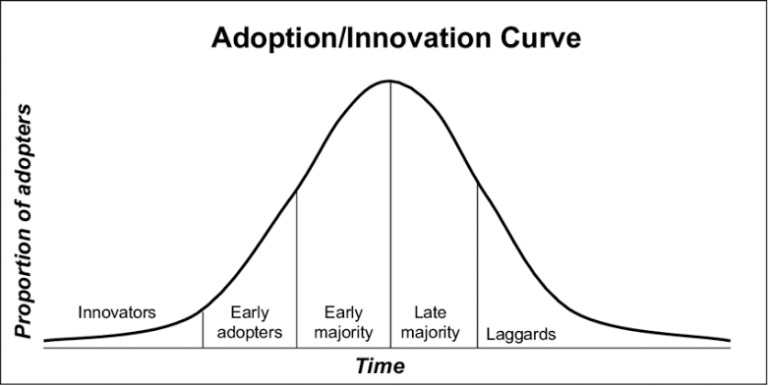
Rules of Wealth By Richard Templar

I recently read the rules of wealth by Richard Templar and I decided to share them on my blog so that you can all benefit.
It’s divided into 5 parts; thinking wealthy, getting wealthy, getting even wealthier, staying wealthy, sharing your wealth, and the rules of other people’s wealth.
Have fun reading them below:
Thinking wealthy
1 Anybody can be wealthy – you just need to apply yourself
2 Decide on your definition of wealth
3 Set your objectives
4 Keep it under your hat
5 Most people are too lazy to be wealthy
6 Get a reality check
7 Understand your money beliefs and where they come from
8 Understand that wealth is a consequence, not a reward
9 Decide what you want money for
10 Understand that money begets money
11 Calculate the net return
12 If you see money as the solution you’ll find it becomes the problem
13 You can make lots of money, you can enjoy your job, and you can sleep nights
14 Don’t make money by being bad
15 Money and happiness – understand their relationship
16 Know the difference between price and value
17 Know how the wealthy think
18 Don’t envy what others have
19 It’s harder to manage yourself than it is to manage your money
Getting wealthy
20 You’ve got to know where you are before you start
21 You’ve got to have a plan
22 Get your finances under control
23 Insurance pays someone, and odds are it’s not you
24 Only by looking wealthy can you become wealthy
25 Speculate to accumulate (no, this isn’t gambling)
26 Decide your attitude to risk
27 Think through the alternatives to taking a risk
28 If you don’t trust someone, don’t do business with them
29 It’s never too late to start getting wealthy
30 Start saving young (or teach your kids this one if it’s too late for you)
31 Understand that your financial needs change at different stages of your life
32 You have to work hard to get rich enough not to have to work hard
33 Learn the art of deal-making
34 Learn the art of negotiating
35 Small economies won’t make you wealthy but they will make you miserable
36 Real wealth comes from deals, not fees
37 Understand that working for others won’t necessarily make you rich – but it might
38 Don’t waste time procrastinating – make money decisions quickly
39 Work as if you didn’t need the money
40 Spend less than you earn
41 Don’t borrow money – unless you really, really have to
42 Consider consolidating debts
43 Cultivate a skill and it’ll repay you over and over again
44 Pay off your loans and debts as a priority
45 Don’t be too busy earning a living to make some money
46 Save in big chunks – or should you?
47 Don’t rent, buy
48 Understand what investing really means
49 Build a bit of capital then invest it wisely
50 Understand that property, in the long run, will not outpace shares
51 Master the art of selling
52 See yourself as others do
53 Don’t believe you can always win
54 Don’t pick stocks yourself if you don’t know what you’re doing
55 Understand how the stock market really works
56 Only buy shares (or anything) you can understand
57 Use your head
58 By all means, use the investment professionals (but don’t be used by them)
59 If you are going to get financial advice, pay for it
60 Don’t fiddle
61 Think long term
62 Have a set time of day to work on your wealth strategy
63 Pay attention to detail
64 Create new income streams
65 Learn to play ‘What if?’
66 Control spending impulses
67 Don’t answer ads that promise get-rich-quick schemes – it won’t be you who gets rich quick
68 There are no secrets
69 Don’t just read this – do something
Getting even wealthier
70 Carry out a finance health check regularly
71 Get some money mentors
72 Play your hunches
73 Don’t sit back
74 Get someone to do the stuff you can’t
75 Know yourself – solo, duo or team player
76 Look for the hidden asset/opportunity
77 Don’t try to get rich too quickly
78 Always ask what’s in it for them
79 Make your money work for you
80 Know when to let go of investments
81 Know your own style
82 Know why you should be able to read a balance sheet – and how
83 Be one step ahead of your tax collector
84 Learn how to make your assets work for you
85 Don’t ever believe you’re only worth what you are being paid
86 Don’t follow the same route as everyone else
Staying wealthy
87 Shop for quality
88 Check the small print
89 Don’t spend it before you’ve got it
90 Put something aside for your old age – no, more than that!
91 Put something aside for emergencies/rainy days – the contingency fund
92 You paid what for it? How to shop around
93 Never borrow money from friends or family (but you can allow them to invest)
94 Don’t surrender equity
95 Know when to stop
Sharing your wealth
96 Use your wealth wisely
97 Never lend money to friends or family unless you are prepared to write it off
98 Don’t lend, take equities
99 You really, really can’t take it with you
100 Know when/how to say no – and yes
101 Find ways to give people money without them feeling they are in your debt
102 Don’t over-protect your children from the valuable experience of poverty
103 Know how to choose charities/good causes
104 Spend your own money because no one will spend it as wisely as you
105 Take responsibility before you take advice
106 Once you’ve got it, don’t flaunt it
107 What’s next? Pacts with the devil?
The Rules of other people’s wealth
1 Don’t judge
2 Don’t envy it
3 Other people’s money belongs to them
4 They can give it all away if they like
5 Once they’ve gone, you can’t ask questions
6 Blood comes before money
7 Your children owe you nothing
8 Don’t make money taboo
9 If they give it to you, it’s yours
So that’s all.
What do you think? Do you like the rules?
Feel free to drop your opinion in the comments 👇
The Yes Sir & Yes Ma Culture – Is it bad?

Why is too much “Sir”, “Ma” or the “Yes Sir, Yes Ma” culture not good?
1. It is not good when you use it in every conversation and meeting.
Aside from School/university, family, religious and political settings, you don’t need it. I removed the business setting from the above because it’s really not necessary. Business is all about providing value, getting value, and relating well with others. If you have good ethics like honesty, integrity, reliability, consistency, etc, you’re good to go. Being a yes-sir person is not really needed. You may need it in politics but in business, it’s not needed. Doing it won’t get you to the top. As a digital entrepreneur, most of the foreigners have worked with never want me to call them “Sirs”. They are not after servitude or me being a sycophant(yes men) to them. What they are after is me being exceptional and delivering great work consistently. And this leads to my next point.2. When people tell you Yes sir to everything you say, you tend to really believe they are good without validation.
You may not bother checking the data/fact about their work. You just tend to believe they’re respectful which they’re not. My recent experience says much about this. Someone who calls me “Yes Sir” every time went ahead to perform a couple of atrocities on my construction site which left me perplexed. When you remove people calling you Sir always. They tend to behave like their normal self and you can get to quickly know who they are. I have tried it in my office. I told everybody to call me by my name Kenny. That way, I saw their true behaviors. I knew those that were truly respectful and those that were not. 3. The removal of yes-men from your business enables you to judge people based on the metrics for the task to be achieved and not just respect. Some people use “Yes Sir” so you would never suspect them. Do not fall victim to this. I repeat, don’t let someone’s “Yes Sir” fool you. In business that’s not the most important thing. What’s important is the value they’re giving and their ethics. If a moron or a bad actor is telling you “Yes sir”. Don’t hesitate to fire them. You need people that are truly respectful, hardworking, and have the right mindset and attitude. You do not need yes-men. I believe with these few points of mine; I have been able to enlighten you about the “Yes Sir, Yes Ma” culture. Feel free to share your opinion below. And here is another article that can throw more light on the topic.Why Trust Must Be Earned And Not Just Given

There are a whole lot of articles online on how trust is earned and not given.
We also have a lot on why trust is also given and not earned.
While I wouldn’t want to argue that fact, I just want to give you a real-life scenario of why you shouldn’t just give your trust to people anyhow without them earning it first, especially if they’re total strangers.
I do come from a very kind family. My grandparents, and parents – especially my late dad – are very kind.
They can go to any length to support others and ensure they’re doing well even though such people never reciprocate.
I know you’re thinking it’s good to give without any expectation.
Yes, you’re right. However, when such giving requires you to trust complete strangers on very cogent and life-changing matters, you must be very careful to not give your trust all out at once. If you do, it may come back to hurt you.
Like my dad, I’m also very kind.
Most of my resources I give out for free to other people to use and grow.
But recently, I have identified where I have been making a major mistake and I will be sharing it in this article.
The fact is that you must learn how to trust, help, assist, support, and give to people gradually.
And if they show appreciation, competence, fruitfulness, and gratitude then and only then should you give them more opportunity.
Another way to put this is that helping and giving out your trust to people should be a step-by-step process like climbing a ladder.
If you ignore this golden nugget, you may find yourself in a very ludicrous situation.
Here is my sober experience.
I saw a well-completed building inside Bodija Estate, Ibadan sometime in late November last year. I immediately asked for the builder who constructed the building.

I got his contact and as soon as he finished that particular building, I message him to come and continue my own building and I entrusted him with everything about my construction. Little do I know that was a great mistake.
Guess what?
After he received over ₦300,000 from me. An amount to cover workmanship for the total block wall on the ground floor, the job halted as we reached the lintel level due to unknown reasons – which I later found to be supernatural.
I also lost interest in the project and stopped going there from April, until today December 3rd, 2022.
That’s a whole 6 months that I didn’t go to the construction site.
Why did I suddenly go to the site?
Although I have always wanted to go to the site for some time. Something will just happen and my mind will skip it, and I will be unable to go.
So recently, the builder I handed over the site to called me that the community challenged him when they saw a juju inside my property.
He then came to my office and told me he did the juju there to just scare people away from stealing reinforcement and other materials on my site.
Later that evening, the community called me and said they wanted to see me.
I told them we can meet on Saturday 3rd December 2022 by 12 pm.
I got there and after some conversation with the community head and chief security officer(CSO), they said the builder told them he uses the juju to protect himself in this building work his doing so he would not fall down.
While this might be genuine reasons.
I immediately got annoyed that the builder would tell me something else and tell the community another thing.
It shows something is fishy, and there’s something he’s not telling me.
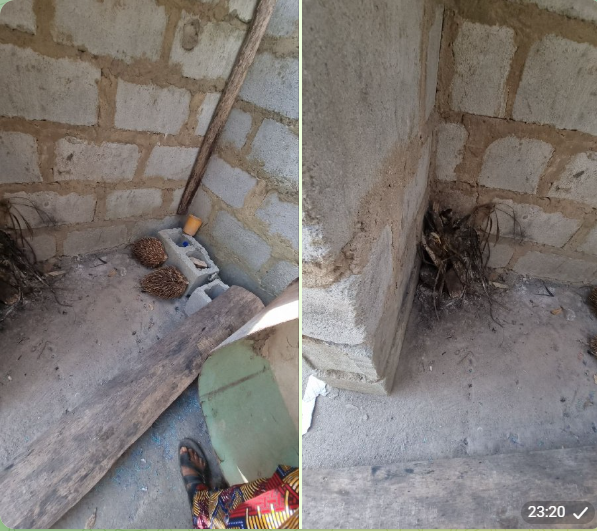
Later on, the CSO took me to where the builder kept the juju on my property and I was perplexed by what I saw.
I saw a burnt full-sized chicken tied to broken spade/iron and 2 bunch of oil palms.
Here is it below👇
It was so shocking to me and the only thing I could think of is that; this builder guy has a devil inside my property that he normally pour palm oil on.
And he has the gut to do it without my permission.
Anyways, the community CSO said the possibility here is that the builder is doing something fetish that could have repercussions on
- My property and I – no wonder work slowed down.
- The community – I hope he didn’t use anyone in the community.
- The builder himself. He may be using that juju to gain ground to do his work and get clients to pay him very well and keep giving him construction jobs.
It quickly crosses my mind that he recently told me that the woman that gave him work in Bodija, Ibadan has been praising him while the same woman complains about the work other engineers are building for her on other sites.
The more I thought deeper into the past encounter have had with this builder guy, the more I keep connecting the dot backward with our previous conversations.
I could remember vividly that I saw chicken feathers around my property in April before I stopped going to the site. And when I asked him and the baba I kept on the site where is the source of the feather.
They said they bought a chicken and a cat ate it overnight and they poured the wings inside the block. Looking back, I made the mistake of not taking this matter up. I thought it was a minor thing and I ignored it.
I wasn’t really paying much attention to details.
And some months into that period a boss of mine even told me to keep paying attention to details consistently.
Anyways, let’s continue with the matter at hand.
The community said if they would leave the builder to keep working for me that I will sign an agreement that whatever the man does I will be held responsible for it.
Otherwise, they would send him out away from the vicinity.
I told them to go ahead and send him away from the community as I don’t even want him to work for me again. I can’t work with an employee/builder/contractor who lies to me.
Besides, I didn’t tell you that this same builder got another job in Bodija that his currently doing but rented a house near my site.
And people say they use to see him go to my site and stay till 11:30 pm before going back to the house he rented.
I believe he might have used the juju to hold my house down till he completes his new work.
He might also have used it to gather spirit to help him do fast work in the current building his doing.
All this is very possible.
Nevertheless, this is what have learned from this recent experience.
- Because you saw a past project of a builder that’s good doesn’t mean you should just hand over all your project to him with the thinking that he would handle your own project well.That isn’t true. I should have taken my time before trusting him too much and allowing him to sleep and do many activities on my site.
- I should have gotten a recommendation from a close person before giving him the job. Now there is nobody I can report him to as I met him on a site and I collected his number because I liked his job.This actually a bad way to hire people.I believe it might have even been his jazz that made me notice the building he built at Bodija that day.In case you don’t know, that same building was featured in the newspaper as he sent it to me on Whatsapp.

The launching of the house the builder built at Bodija. 
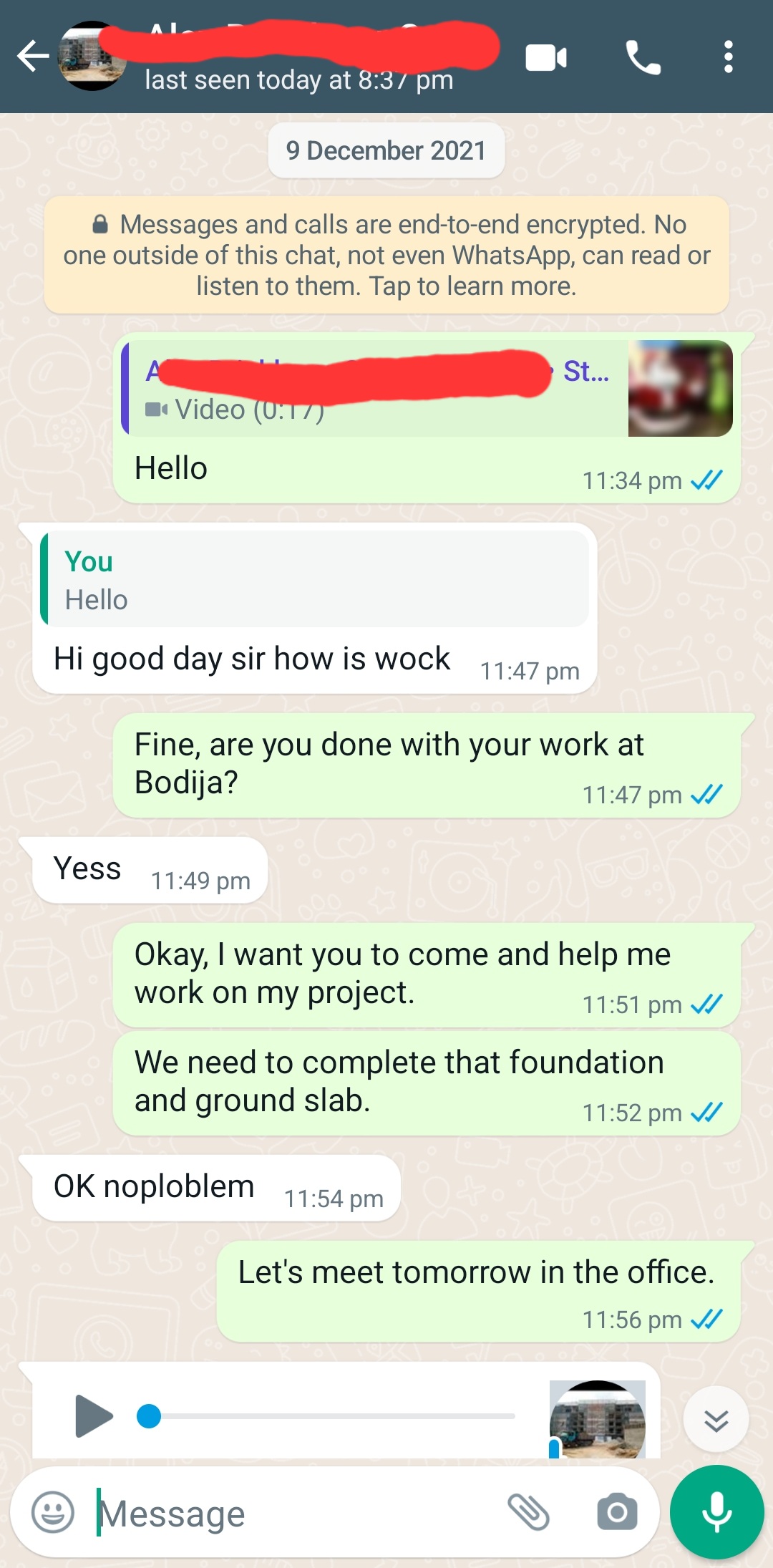
The launching ceremony. - I need to pay more attention to details and stop openly seeking advice from people who don’t have skin in the game. This guy only wanted money and his willingness to get it through any means. I’m sure most of the building advice he gave me wasn’t valid has it just so we can spend or pay him more money. Mind you, I just realise that since the day I collected his number in late November 2021, I just couldn’t rest until I gave him a job. I tried giving him a soakaway digging job to which he brought some Abiki but he didn’t do the work.Later on, I messaged him on WhatsApp on the 9th of December to come and assist with foundation work.
- Stop being accessible to people who don’t deserve your time.
Another mistake I made with trusting people has to do with a lady I employed at my office in January 2022.
When she came, I gave her:
- orientation about her task
- all my office keys,
- a laptop,
- access to the internet,
- And I also provide food occasionally – let’s say once a day.
I trusted her too much.
Guess what?
She started taking me for granted and started feeling pompous.
That was when I realized I had let my guard loose too soon.
I gave her a lot of things she didn’t deserve or earn.
Now she thinks she deserves much more without putting in more work.
Anyways, I have learned my lesson.
As from today, I will start paying more attention to details and be consistent at it.
I will give my trust out like a ladder. People need to earn it step by step.
Even at that, I wouldn’t just lose or lower my guard.
I will only give certain privileges to those that have shown that they deserve them based on their work and moral ethics.
I will also ensure I’m always proactive by visiting my site, project, or business regularly or sending someone to do that for me.
I will also ensure I don’t look for cheap things or cheap people because nothing good is cheap.
Most of the time, things that are cheap now will give you problems later. And this is not only limited to construction. It does cut across all industries.
Finally, I need to limit my access and availability to people who don’t deserve my time.
I hope you have learned something new today.
Feel free to comment with your thoughts below.
Also, share your story if you have had a similar occurrence.
Thank you.
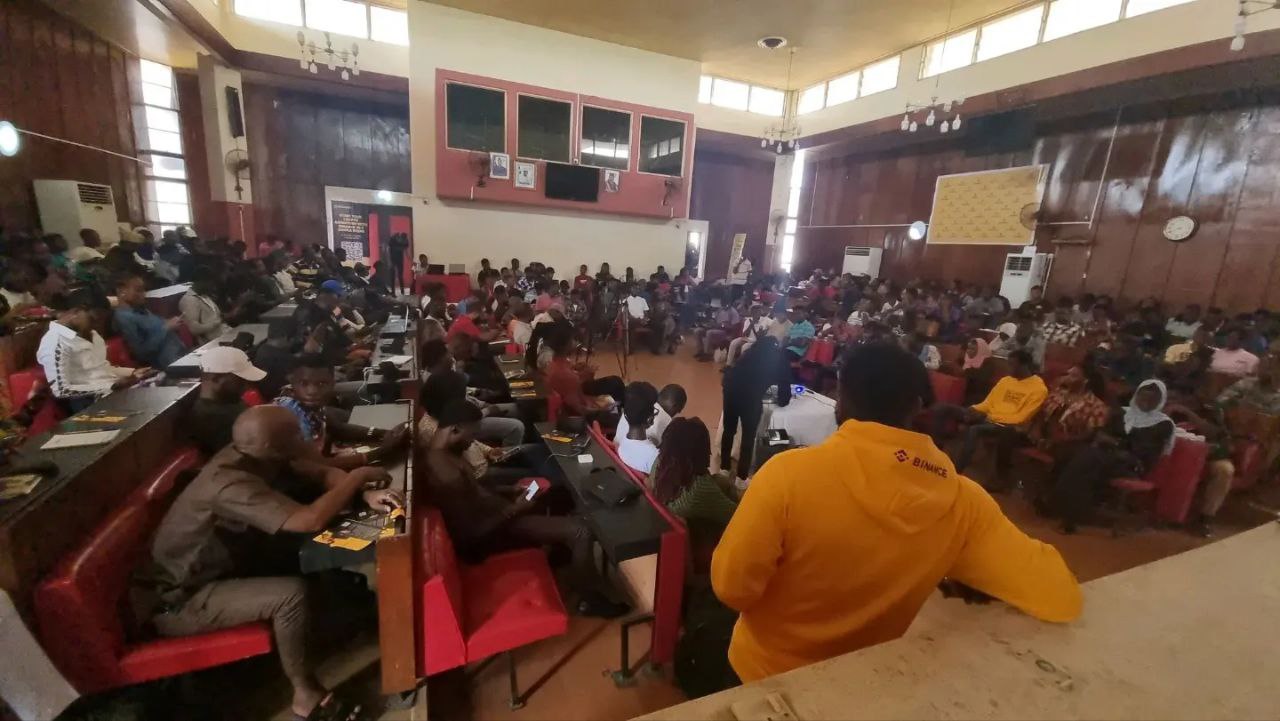
Massive Energy at the Binance Meetup Ibadan 2022!
The crypto community in Ibadan is truly like no other! We recently wrapped up the Binance Meetup Ibadan, and the atmosphere was nothing short of electric.
It was an absolute privilege to share the stage with Nsikan Benjamin and Olubunmi Fabanwo. Together, we had the incredible opportunity to connect with passionate traders, investors, and crypto enthusiasts looking to level up their financial journey.
Highlights from the Event:
-
Inspiring Stories: We heard firsthand accounts of how crypto is changing lives right here in Nigeria.
-
Deep Dives: From mastering the Binance P2P platform to understanding the fundamentals of blockchain, the questions were sharp and the learning was intense.
-
Community Impact: Our goal has always been to simplify the crypto space, and seeing so many people leave with more clarity was the ultimate reward.
The energy in Ibadan proves one thing: the future of finance is here, and we are just getting started.
Catch the Highlights
Check out the gallery below to see the massive turnout and the “9jacashflow energy” in action:






Binance To Hold Community Meetup In Ibadan On 15th November 2022
Binance the world’s largest cryptocurrency exchange is holding a community meetup in Ibadan on Tuesday 15th November 2022 at the University of Ibadan(UI). This meetup is aimed at empowering a vast majority of Ibadan residents by exposing them to practical ways to gain financial freedom. The location is at the UI Hotel Main Hall. Time is 11:00 AM – 2:00 PM prompt. Quizzes, refreshments, and other side attractions are available. Moreover, It is an opportunity for you to meet like minds in the crypto space, brainstorm together, and share your experience/pain points. Let’s buidl the crypto space together. Attendance is strictly by registration. Kindly register for the event here or https://www.eventbrite.com/e/binance-community-meetup-ibadan-tickets-463858502267 Let’s discuss Cryptocurrency Trading, DeFi, P2P, DAO, Metaverse, NFT, and many more. We have limited tickets available, so head over to Eventbrite to book your seat now.
For more inquiries call Kenny(+234 810 185 0909).
The No 1 Rule Of Business: Find A Motivated Buyer or Hungry Crowd

- A classy structure,
- A fancy building
- Sweet and delectable cuisine that is inexpensive,
- Warm surroundings,
- A well secured structure VIP,
- Lots of dishes/menus, etc.
Here is how I will go about it.
1. Market first Before you go and stock your warehouse or office with goods thinking that your customers will buy them, try to market it to them first. Get samples from a friend, factory, or warehouse and take them to your target audience. If they buy, cool, you’re on your way to having a successful business. If they don’t buy, then you have instant feedback on what will not sell. 2. Make more research on why, how, where, and when your customers buy When you first market a product and people buy, that doesn’t mean they would continue buying. As a matter of fact, they might have bought earlier because they were shy or pitied you. Maybe they didn’t even want to disappoint you. The next step you must take to determine if they are really a motivated buyer is to try to sell to them again. If they buy the 2nd, 3rd, and 4th time, then they are a real customer that needs the product and have the capacity(money) to buy it. These are the kind of people you can bank your business on. If they don’t buy repeatedly, then they might not be really interested in the product or services. Also, they may not be able to afford it. You can’t bank your business on this kind of customers. It’s important to have repeated sales. That’s the right step to having a successful business. 3. Start small Now that you have repeated buyers/customers don’t just go and put all your money into the business, instead do a small experiment. In this experiment you start with a small amount of capital. You take a portion of all your savings/investment capital – let’s say 30%, you put it into the business and try to sell. If you sell all or majority of your inventory, you can invest more money. If you don’t sell all, don’t invest more money into buying new stock. Instead, work on your sales and marketing or find another business opportunity. I know that there are exceptions to this rule, however, this rule will ensure that you don’t go broke in your business. Also, you won’t get to a situation where you are very desperate to sell at a loss or lose all your money. Maybe if you are a billionaire and you have all the money to iterate and keep going you can avoid this method completely. The whole idea behind this method of starting a business is to avoid the sunk cost mistake where you spend a lot of money that you may never be able to recoup back and instead of you to stop and cut your loss, you just keep spending hoping to get things right. Nothing is guaranteed in business, hence, I will suggest people cut their losses when situation warrants. I did the same thing in my catfish business. I cut my loss after investing million and the returns where in thousands due to several reasons. Anyways, I hope you have learnt something today. Feel free to comment or share your view point below.12 Bad Habits That Will Make You Poor In Crypto In The Next 10 years

Yesterday I posted an article on good habits that can make you a crypto millionaire In 10 years
Today we will be looking at 12 bad habits that will make you poor in crypto in 10 years
1. Stop learning about crypto:
If you stop learning and keeping up to date about crypto, you soon get outdated and miss a lot of opportunities.
I will suggest you take at least every weekend to catch up with crypto.
2. Not doing your own research
Do Your Own Research(DYOR) is a popular crypto terminology that we all need to abide by if we want to survive in this market.
Don’t just take things at face value, or believe everything people tell you.
Dig further and do your due diligence.
3. Focusing on 100x shitcoin and high APY
If your focus in the crypto space is to find the next 100x shitcoin that’s going to go to the moon, you may be disappointed if all your investment goes south and you end up getting broke.
Also, invest in well-established coins that won’t go to zero.
4. Not having other sources of income
Not having a job or a business and solely depending on crypto to survive is the fastest way to get rekt in crypto.
Crypto is highly manipulated so don’t bank your daily living expenses on it.
5. Putting all capital in a single coin
Investing all your capital in a single coin is the easiest way to give yourself unnecessary stress and panic, especially when you don’t plan to hold it for the long term.
Nothing is guaranteed in crypto, so act accordingly.
6. Not HODLing or panic selling
If you bought a coin to hold for a long time but eventually sold it the instant you read a piece of negative news, you may end up never getting rich in crypto.
After doing your due diligence and you bought a coin, hold it for the stipulated time that you planned to hold the investment.
Don’t be a paper hand (someone who sold his/her crypto due to fear and fall in price).
7. Not taking profit
My advice is to take some profit or at least remove your initial capital whenever you see some profit on the table.
Don’t wait for people to tell you to take a profit.
8. Leaving all your coins in the crypto exchange
If you leave all your coins in the crypto exchange and it got hacked or went bankrupt, that can be a horrible situation.
Always spread your crypto around. Don’t put them in a single basket.
9. Not being security conscious
Bragging about your crypto or purposefully showing off can lead you into trouble with robbers, kidnappers, and law enforcement agencies.
Invest and keep quiet. Don’t create trouble for yourself.
10. Not diversifying your portfolio
If you make huge money with crypto and you fail to diversify to other markets, and just left it, you can also lose most of it. Not, you need to diversify with wisdom. Start by keep some of your profits in stable coins or fiat currencies, then only invest/divest into things you know about and understand. Only invest a portion of your profit(like 10%) at a go.
11. Listening to everybody (Buying high, selling low)
If you listen to what everybody says you should buy and what they say you should sell, you may end up losing a lot of money.
Most times everybody is too late.
12. Trading crypto with high leverage
One of the fastest ways to lose your crypto is to trade with high leverage.
It’s much better to stick to trading the spot market where you can avoid total liquidation.
So that’s all about the 12 habits that will make you poor in crypto in the next 10 years.
I hope you have gained some value.
Do leave some comments below.
You can read 12 good habits that will make you a crypto millionaire In 10 years here.
Happy Independence Day Guys!

62% off all our premium resources
Choose any of the products below, and make a 38% payment to our corporate account(GTB: 0523458530 9jacashflow Education) then send a WhatsApp message to: +234 810 185 0909 to get instant access.
The Cryptocurrency Profit & Mastery Course
How to earn passive income on Binance P2P
9jacashflow Crypto Mentoring Program
9jacashflow US Importation Guide 2022
To your financial success
Kehinde Lawal
Founder & CEO 9jacashflow
08101850909
Jumia Pickup Station: Is It A Good Business?

Over the past few years, I got interested in having a franchise – which is an already existing business with a well-established operating system.
I needed to open one because I didn’t know how to create a business system and I thought I could learn how to by joining an existing franchise.
I made a research for popular franchises in Nigeria and I got a list of 3 multi-billion naira businesses, which are:
- United Parcel Service(UPS): one of the largest and most trusted Global shipping and logistics companies worldwide.
- Habib Yogurt: a local yogurt and fresh food company
- Jumia Pick Up Station(PUS): This is the logistic and fulfillment arm of one of Jumia(Nigerian No1 eCommerce platform)
I applied to the 3 of them but only the 3rd option worked out(Jumia PUS).
- UPS said they were going to send their representative but they never showed up. After placing reminder calls, I was told that the company was undergoing restructuring and I needed to wait for a while.
- Habib Yogurt said I was too close to 1 of their current vendor(franchise owner) and there need to be at least a 10km distance between each vendor.
- I even tried applying to the DHL franchise. They also said they were going to come for an inspection from their head office in Lagos but didn’t show up.
So I had no choice but to settle for Jumia PUS which I later got to know wasn’t a full-fledged franchise.
Although I applied in October 2021, it took another 5 months before we got trained and began our PUS Operation.
So is Jumia PUS worth it?
I will say yes; it does worth it if you have an existing business in a good location, and you’re looking for ways to earn extra income.
Contrarily, I will say no because of the following experience I had while running my pick-up station.
1. Poor communication
Right from the start of the PUS application to the beginning of our PUS operation, the communication has been shabby. We got no response for a period of 4 months and upon placing a call to them on January 2022, I was told the program has not commenced. A month and a half after my call, they sent an email with the document to fill out and the date to begin the training.
On the set date of the PUS training, I was perplexed to realize even the person to train us was not aware of the said training. That even shows poor communication between the Jumia Nigeria team. We wasted the whole day and we were told to come back the next week.
That’s actually the norm for many Nigerian small businesses, banks, and public institutions. And it’s imperative to stop that menace starting from our personal businesses. Do not keep people waiting. It shows a lack of preparation and the fact that you don’t value their time and your time.
2. Not a franchise
The Jumia Pick-Up Station business is not a real franchise.
:max_bytes(150000):strip_icc():gifv():format(webp)/TermDefinitions_Franchise_finalv1-1effd4b1fe1d4982a273bb6fed16a009.png)
A franchise is a joint venture between a franchisor and a franchisee. The franchisor is the original business. It sells the right to use its name and idea. The franchisee buys this right to sell the franchisor’s goods or services under an existing business model and trademark.
In the Jumia PUS business, we’re just a chess pun in their delivery business which is a separate company from Jumia – I got to know this later on in the agreement. We were paid 200 per customer(whether they pick up several packages or not) and that leads to my next point; scalability.
3. It is not scalable
The Jumia PUS business is not scalable. There’s really no way you can increase your income as an operator of the station simply because
- The 200 commission is fixed
- Jumia charge customers per package for delivery but they pay you to deliver per customer
- If you invited 100 persons to buy from Jumia, the maximum income you will make is ₦20,000(₦200 * 100) whether they bought 1 product each or 10 products each.
4. It is not really profitable
The Jumia PUS business is not really profitable if you consider the internet subscription that you spend to confirm products on their dashboard once it gets to you and when you deliver them to their customers. Sometimes, I spend ₦8000/month on MTN data(that’s ₦2000/week), you should know how MTN swallows their data.
Apart from that, the business also requires a lot of time to ensure things work smoothly. Even though I employed someone for who I paid ₦15,000 monthly, I also spend time confirming the goods we have were complete in the morning and in the evening. Same with collecting items from their delivery man who sometimes comes very late in the evening when my employee had gone home.
And if I complained of late delivery from their employee or I went home early(5:00 pm) and didn’t pick up for that day, Jumia will be the first to complain that didn’t I know they promised their customers same-day delivery.
anyways, my first payment was ₦29,450 even though I was supposed to receive ₦31,000 (₦7000 package commission and ₦24,000 bonus for working on Saturdays). That’s some people in the Jumia account department still deduct from our money which I will soon talk about.
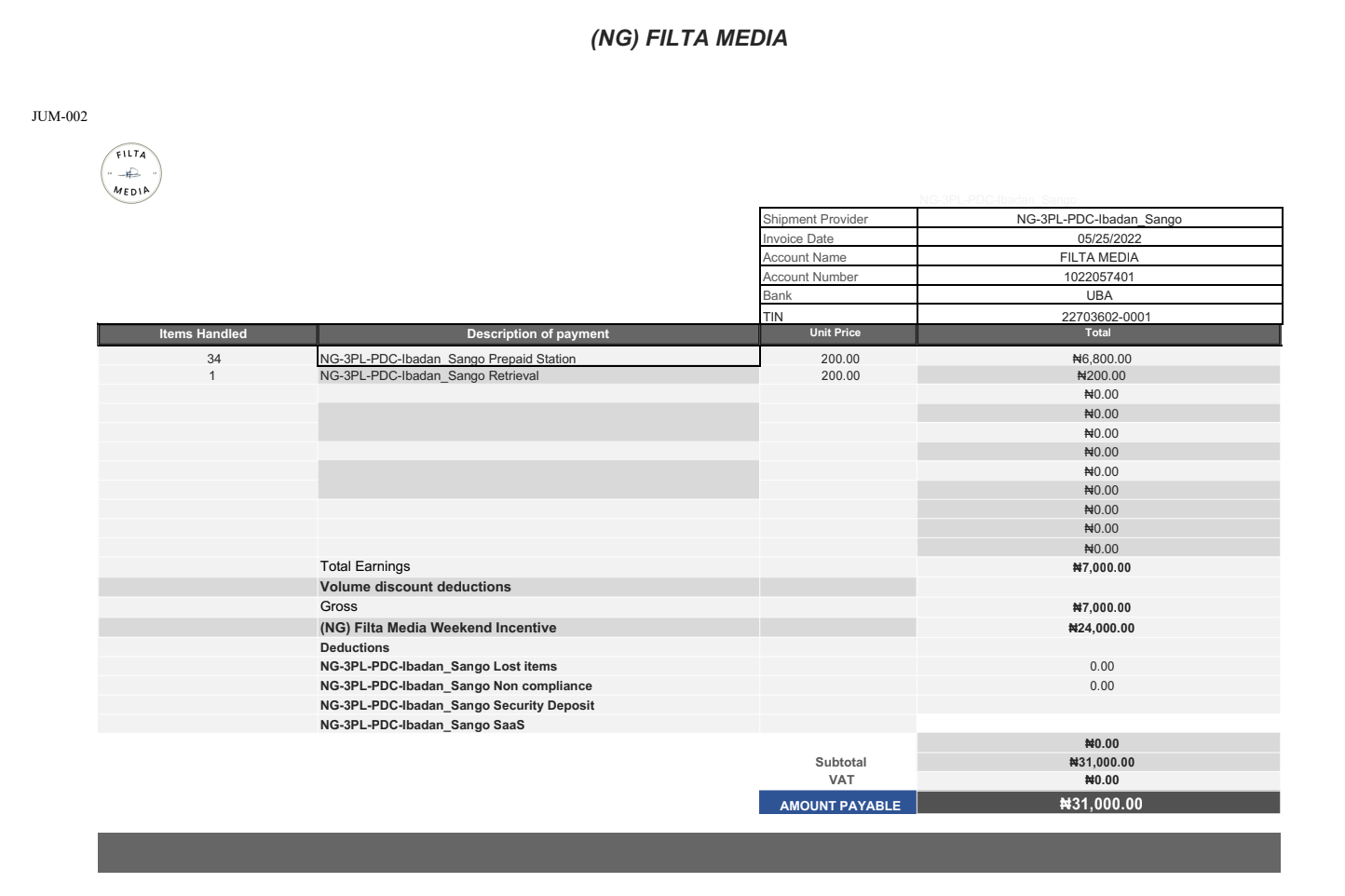
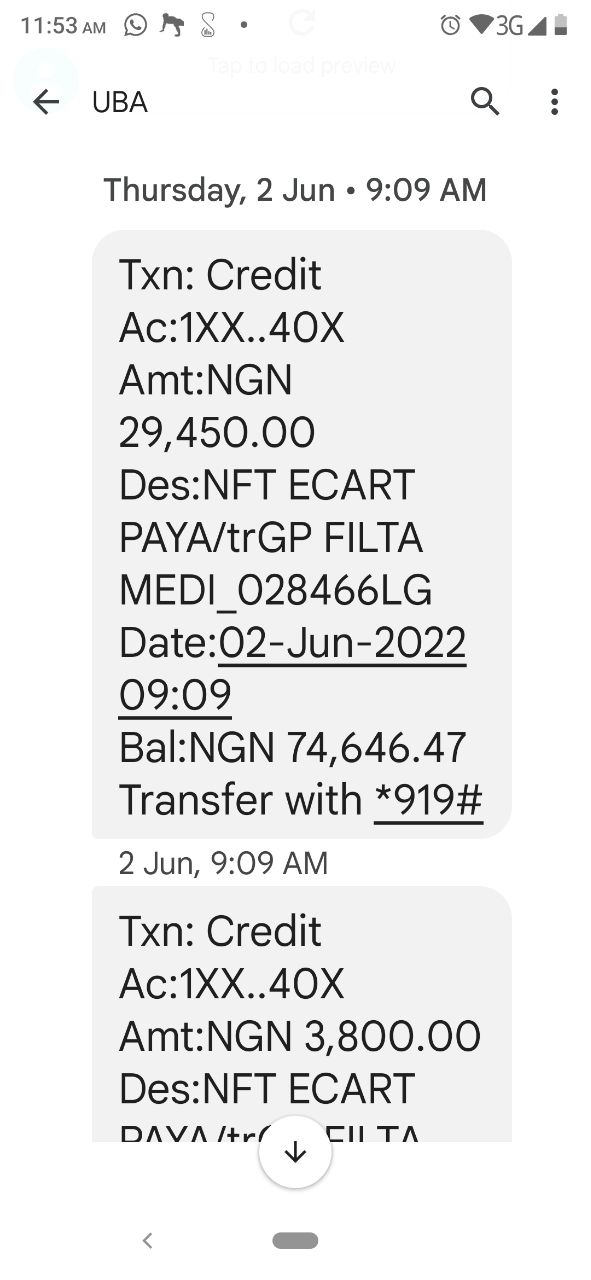
The ₦3,800 was the commission payment for the month of April. Anyways, the highest commission payment I got in the month afterwords is ₦8000. And if you subtract my monthly expenses of ₦8000 data subscription, you can see that I have no more money to pay my employee. This shows the business is not profitable.
5. Late payment
Even though I started the pickup station on March 28, I got my first payment on June 2 as you can see above.
Our payments are not sent automatically and no information was passed across on how to request our payments. It took several visits to the state head office and countless emails before we got sent the invoice link and google form to request for payment.
Again, so much time wasting and inefficiency, which is my next point.
6. Inefficient system and complicated HMT dashboard
As explained above, their payment system is inefficient. But that is not all, it’s also the same with their communication systems. There have been times that I wouldn’t get a response after sending countless emails to my immediate contact person; even several phone calls were not picked up. And not until I copy his supervisor or visit the state head branch till I get a quick response. This shouldn’t be so.
Also, I have had times when the manager in charge would confirm that products had reached our hub even when they were yet to be delivered to us. This situation has led to customers coming to our hub for pickup when they got such notifications even though they are not yet delivered to us. This time waste on the customer’s part and it happened not once, twice, or thrice.
7. Bad practices from their accounting staff
The bad practices I noticed were related to our commission payment.
- We usually get less than our commission sent to our bank account. As you saw in my 5th point above; I sent an invoice for ₦31,000 but received ₦29,450. That’s more than ₦1,550 gone, I will consider that to be the transfer fee. The biggest transfer fee of any bank. Or let’s say it’s a tax that we’re paying that was never communicated to us.
- Also, in my 4th month, I got debited ₦2,008.50 for an unknown fee called the SaaS fee. That was never in our agreement and when I asked why they charge that, I got a response after 2 weeks that it’s a monthly charge for software charges rendered and they start charging it from the 4th invoice
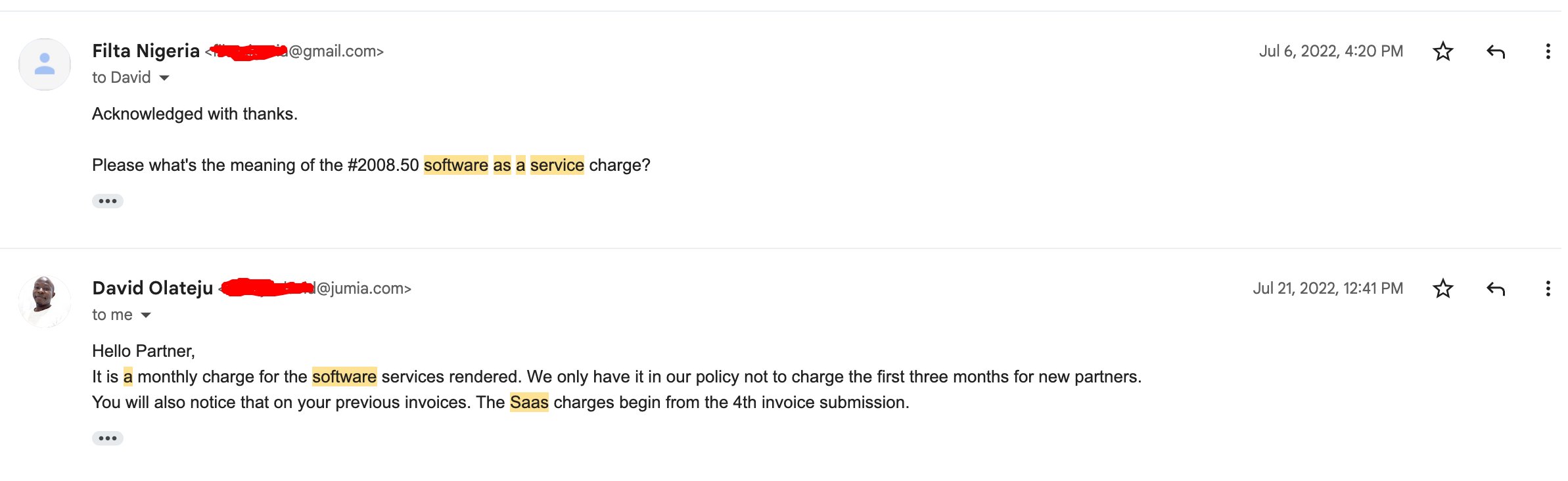
Anyways, I stopped the business in the 4th month because the ₦8,000 monthly commission payment minus the ₦2,002 SaaS fee is ₦6000. Which is nothing to write home for me.
8. High return rate on their products
Another issue I noticed is the high return rate of products, especially gadgets. This is not really an issue with the Jumia. It’s an issue with merchants/vendors selling fake products on the platform. I believe Jumia can improve its Quality Assurance check and ensure a reduction in the number of substandard products sold on its platform.
A customer once got a slightly different Samsung A22 phone pouch from what he ordered. I had to help him initiate the refund and returned it back to the Jumia state head office Unfortunately, the item was returned back to me after 28 days(1 month). I was told I didn’t return it via the right channel on the online dashboard hence I will need to pay for it as it was already termed lost.
It was my mistake so I’m responsible to pay the ₦4,400 cost of the pouch for not returning it via the appropriate channel. Anyways, my twin sister later changed her phone to Samsung A22, so I gave her the black pouch. But I believe if Jumia had ensured the vendor sent the exact product based on his/her description the issue would have never occurred.
9. High risk-to-reward ratio

The PUS business actually has a very high risk-to-reward ratio; that is if you compare the inherent risk to potential profit, it doesn’t worth it.
Imagine someone stole any of the packages in my station worth let’s say ₦20,000, the monthly commission payment of ₦8000 will never be enough to cover such losses.
And that’s why a lot of people who did the business are currently owing Jumia money. But I’m glad I shut down my PUS business before it got to that stage.
10. Low purchasing power & disposable income
My last point is relating to the purchasing power and disposable income of Nigerians as a whole.
Because Nigerians have a relatively low purchasing power and disposable income, Jumia isn’t necessarily profitable and that’s why
- Their partners(including pickup stations) cannot be also profitable
- In addition, all the negative reasons shared about the PUS business are not entirely Jumia’s fault
- Jumia is trying its best to give more value and most especially good shopping experience to Nigerians but the market isn’t encouraging. And I doubt if they can continue to run at a loss for too long.
So in a nutshell, that is my experience with the Jumia Pick-Up Station business.
It’s important I let you know that I have nothing against Jumia as they’re a good brand. I’m only sharing this article so that fellow Nigerians out there can learn from my experience. They don’t need to start from scratch or fall into the same pit I fell into.
Also, small and medium businesses, big corporations, and public institutions should try as much as possible to overcome some of the bad practices I mention above that their staffs tend to do without the management knowing.
Finally, I’m not perfect as well. I have my own lapses, which everybody does. But it’s important we understand that business is about service and giving every person involved a good experience and not trying to cheat one another – a culture that’s popular in Nigeria.
My overall message is that we should try to give more to one another and not just take more from one another.
Feel free to disagree or agree with me below if you had similar experiences with Jumia or another Nigerian franchise.
Thank you.