In the final article, I covered what you must know when trading crypto perpetual futures contracts. I also gave reasons why I don’t recommend futures to newbies and intermediate traders. Read more about it here.
Other articles worth reading on the 9jacashfow blog are:
A lot of people also asked me about the current situation of the crypto market.
And here is my response:
I believe at worst we can see another 50% price drop in the crypto market but if you can withstand it, then the exponential gains/returns are yours.
And, if at all you’re selling some of your cryptos to buy back at a low price after another crash in price, don’t sell the major ones that we’re currently accumulating. These are coins like:
Bitcoin Cash(BCH)
Internet Computer (ICP)
Fan tokens(Lazio, etc)
RSR
Monero etc
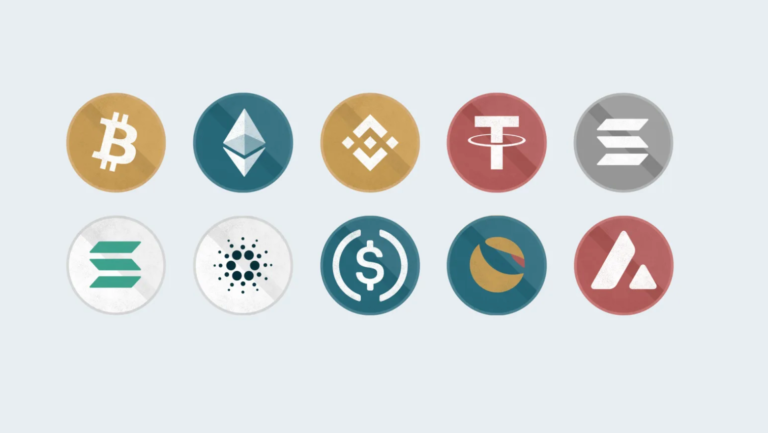
Finally, don’t sell all your medium-risk coins like BTC, ETH, and BNB.
If you don’t understand the difference between low, medium, and high-risk crypto, you may consider reading our article on how to build a well-balanced portfolio.
Crypto Investing Roundup
If you can’t hold crypto for at least 3 months, don’t bother buying.
Profit can either come way sooner or way later.
And while we all expect it to be soon, we need to also plan to be patient in case it doesn’t come.
And I will like to remind you of one of my favorite crypto quotes by CZ, the founder of Binance. He said and I quote, “If you can’t hold, you won’t be rich.”
I’m sure you are thinking I’m currently trading a small amount/portfolio, why should I use a bot?
The reason is simple; it’s important you know about it now so that when you start trading large sums you don’t lose it all within a few days.
You see, bitter occurrences happen regularly in crypto. Off recent, I heard someone lost $400,000(#280,000,000). He made a lot of profit from crypto and started feeling like is the best investor.
Also, Africans are lacking behind in terms of automating their investment. The majority of us still have to log in to a computer before placing any trades. That’s different in the developed world.
Basically, it’s as if we are competing with computers, and it’s important we know how to make computers work for us. It’s painful staying online watching your computer screen and at the end of the day still losing money due to a small mistake in position sizing that a computer will never make.
Here are more reasons you should automate your crypto investing
To avoid losses due to emotional trading or investing(FOMOing)- a bot can minimize the impact that overreaction or wrong reactions can cause to your portfolio.
Computers can help us maximize profit in a very volatile market like crypto
It would help us to not suffer a great loss – if you have suffered one before then you’ll understand this.
Finally, to avoid unnecessary mistakes – humans are prone to mistakes. We can only reduce the amount we make.
How to automate your crypto trading and investing?
Things you can do:
Dollar Cost Averaging(DCA): buy a specific amount at a particular date over a period of time. $100 weekly or $1000 monthly. It’s the simplest and basic automation. It brings objectivity to your investing.
Binance Auto invest option: Instead of timing the market, auto invest buys crypto for you over time at set intervals.
Trading bot: Crypto trading bots are automated software that helps you buy and sell cryptocurrencies at the correct time. The main goal of this software is to increase revenue and reduce losses and risks. It all depends on your strategy.
Trust: a commercial bank or other enterprise organized to perform trustee functions. You can give them your funds and grant them the right to invest it for you objectively and automatedly. It’s mainly for high-net-worth individuals. Common trust platforms are Paxos.com & Gemini.
Platforms to automate your crypto investing?
Here are a few of the crypto bot websites that make it easy to automate – especially for non-coders.
Strategy trading – for spot and futures market: (arbitrage) less recommended.
Pionex.com: Grid Bot, Arbitrage Bot, DCA Bot – support Binance and other top exchanges – Free plan for life.
Cryptohopper.com: Arbitrage, Copy trading, etc – support Binance and other top crypto exchanges – have a free plan
Bitsgap.com: High-frequency Algorithm Trading – support Binance and other top crypto exchanges – have 7-day free trials.
Trality.com: 120+ rules – support Binance and other top exchanges – Free plan for life($5000 trading volume).
Coinrule.com: 150+ rules – support Binance and other top exchanges – Free plan for life($5000 trading volume).
Tradesanta, 3commas, and many more have plans from $8 – $15.
We still have other trading bot platforms out there. I will suggest you do more research to figure out the best and most affordable platforms among them.
I hope you’ve gained more insights on why you need to use trading bots in your crypto trading and investing.
Wishing you the best of luck, and should in case you have any questions, kindly drop them in the comments below. 👇
We know there are tonnes of information out there on crypto, and the question that often pops up in our minds is which of these information sources can we trust, and which of them provides the correct information?
Here are 11 Platforms you can carry out your crypto research:
1. Binance Academy: this platform provides detailed and comprehensive article for those interested in learning about blockchain, cryptocurrency, security, technology, or following along with tutorials. I highly recommend Binance academy because it’s has a very simple user interface and the content is newbie friendly.
2. Binance Research: on this platform you get institutional-grade analysis, in-depth insights, and unbiased information to all participants in the digital asset industry. The platform get referenced by popular media platforms like Bloomberg, Yahoo Finance, and Fortune.
3. Coinmarketcap.com: this a cryptocurrency data aggregator platform. You get cryptocurrency prices, charts, and market capitalization, blog, learn and earn section, etc.
4. Cointelegraph.com: this your number 1 go to platform for recent news about the crypto industry. You get latest news about Bitcoin, Ethereum, blockchain, mining, cryptocurrency prices, and more. They also do interviews, seminars, etc.
5. Twitter.com:This a social media platform for microblogging. You can join conversations, follow accounts of influencers and catch trends. Also, you can join Twitter spaces and have broad discussions in various topics.
6. Private blogs: here thought leaders dive deep into blockchain technology, web 3, DeFi, Dapps even crypto investing for individuals and venture capitalist. Popular once are:
Vitalik.ca: simple blog by VitaliK Buterin on Blockchain, POW, POS, Ethereum
Unenumerated.blogspot.com: where Nick Zabo(founder of the smart contract) share ideas on varieties of topic, money, crypto, blockchain, economics
Haseebq.com or medium.com/@hosseeb : Where haseeb Qureshi, a software engineer, crypto investor, and venture capitalist at Drangonfly capital share his ideas on DeFI, Web 3 etc
7. Podcast: If you’re the type that likes audio content. We have The Pomp Podcast, The Bad Crypto Podcast. This are 2 of the best podcast on crypto available on Google Podcast, Apple and Spotify.
8. Cryptotvplus: A Nigerian crypto news & education platform. They cover local and international conferences & seminars.
9. Conferences and Seminars: You can attend local and international conferences where you can meet like minds and build connections. With this, you may be likely to get insider information or the next big thing.
10. Whatsapp/Telegram & Discord communities of your Crypto projects: Here you get up to date information from experts and project team members. You can even ask direct questions and get responses from the team members. Binance has a community etc.
11. Blockchain Explorers: Here you can carry out onchain research on any blockchain network of your choice. While we have individual block explorers like Etherscan.io, we also have all in one block explorer like Blockchair.com.
I hope you have been able to gain some insights from this article. Feel free to ask questions below. 👇
In this article, I will cover how to build a well-balanced crypto portfolio.
You see, each person(whether a trader or investor) has their own idea of what a well-balanced crypto portfolio is. But we have some general rules worth looking at. I have identified 6 of them below:
General rules to create a well-balanced crypto portfolio
1. Split your portfolio between high, medium, and low-risk investments and give them appropriate/balanced allocation. Not too many high-risk coins as you may incur heavy losses. Also, not too many low-risk coins as you may get very little profit. I consider:
Low-risk coins to be stable coins and other savings products
Medium-risk coins are Bitcoin, Ethereum, and BNB. They’re well established but less volatile – a maximum of 50% drop
High-risk coins to be Altcoins(alternative coins like Shiba Inu, LUNA, Doge, etc). They can have a 95%+ drop. Even LUNA had 100%.
2. Always hold some stablecoins to help provide liquidity for your portfolio.
There will always be opportunities in the market so have a spare stable coin(USDT, BUSD).
You can use them on many DeFi platforms and earn little interest
It can help you quickly and easily lock in gains or exit a position
3. Rebalance your portfolio if needed: This simply means balancing back your portfolio. When one or more assets get out of balance, you take it back to the original allocation ratio. You can do this when the time arises or in specific periods(once a year)
4. Allocate new capital strategically to avoid overweighting any one area of your portfolio. If you’ve made significant gains recently from one coin, it can be tempting to pump in more money in it. You must not let greed interfere, instead, you can think about where to better place the money. Think of other coins and investments yet to skyrocket in price.
5. Do your own research. You are investing your own money, so don’t rely solely on the advice of others, especially from Whatsapp & Telegram messages, news, and mainstream media.
6. Only invest what you can afford to lose. One way to know if your portfolio is correctly balanced is true stress. If you can’t sleep at night or can’t concentrate on your day job or business then something is wrong.
When I find myself in such a situation, I always try to look at the risk involved. That is what is the maximum risk or loss I can get. If it’s too much, I reduce it. I don’t hope or pray about it. My 1st bear market was horrible. You may pass your stress or depressed feeling to your girlfriend and family.
So that’s all I have for you today. I hope you’ve learned something new.
Bitcoin is the most famous cryptocurrency and is the biggest by market cap. However, a well-balanced portfolio will include a selection of different coins to reduce overall risk. Let’s go through some of them.
1. Payment coins: Nowadays we have the likes of DeFi coins, DEX coins etc. However, if you look back in time you know that most coins created were to solve the issue of transfer of value. We have Ripple, Bitcoin Cash, Litecoin and so many more. Existed before Ethereum & Programmable money.
2. Stable coins: These are coins that are pegged 1:1 to a fiat currency or an underlying asset. Eg. BUSD having 1 BUSD = 1 USD, or PAXG; 1 PAXG = 1 Ounce of Gold. Stable coins don’t usually fluctuate – it’s a very minute fluctuations in price(0.001). The cryptocurrency market is volatile, so having something in your portfolio that keeps its value is useful.
Also, most people want to hold their profit without taking it to USD dollar account where they would incure tax obligations. Though people don’t say it.
3. Security Tokens: A security token can represent many things. It could be equity in a company, a bond issued by a project, or even voting rights. Most security tokens are in the jurisdiction of local regulators and must go through a legal process before issuance just like shares.
4. Utility Tokens: Utility tokens are used as the key to access a service or product. BNB and ETH are both utility tokens to pay for transaction fees when interacting with decentralized applications (DAPPs) or other services like crypto trading on the Binance exchange.
5. Governance Tokens: These are used as voting power on DAO, DEXes, and DEFI protocols. By holding them you have the ability to participate in the decision-making or progress of such a decentralized protocol. E.g COMP token on Compound, UNI token on Uniswap
6. Crypto Financial Products: log into your Binance account – Navigate to the Finance or Earn section. You will see: Staking, Pools, Launchpad, ETH2.0, Savings, and other crypto financial products.
7. Leveraged tokens: These are tokens that give traders and investors a leveraged position in trading. This would mean that earnings and losses multiplied while using such tokens. I don’t advise newbie traders to use leverage.
Now that you have gotten a list of the 7 coins you can add to your portfolio. Kindly let me know the ones you currently have in your portfolio and the ones you plan to add in the comments below.
Thank you and God bless.
Please share this article with a good friend of yours.
I recently spotted a unique story on why trading is not easy. And how most people’s trading journey is.
It’s so true whether you’re a crypto or stock trader; hence the reason why I need to share it.
So here it goes👇
I JUST WANTED TO SAY…
Trading is not easy…
It might look easy.
It might look like it is a concept that is very easy to grasp.
It might look like one can get rich quick, like it is all a game.
Don’t get me started about it.
First, you can come in with cash on hand ready to go.
You are blessed with the beginner’s luck;
With the bullish market… Whatever you buy goes up.
You still don’t know how it really works of course, so all gains aren’t realized earnings, everything is lost on the first drop; but you got a taste of it, the potential is real and strong.
Of course, never give up…
Let’s try again.
We come in with cash on hand, no plan, high expectations; ready to earn.
Here comes another wave…
Prices start to go up…
Doubts creep in but still, we sell some and this time we won.
Feeling all good, some time went by and we think we know the game.
Time to step up; Futures, Margin, Leveraged…
All gains lost again in one day.
Trading can be easy but trading is more than choosing the right coins at the right time and knowing when to sell.
Let’s try again.
It is my turn, cash on hand we are ON!
This time around I know the markets.
I know the waves.
Quit leveraged and margin trading.
This time I am holding for long…
What happened?
Some outside circumtance messes up everything you had planned, the conclusion is again money lost.
But not all is lost…
I am gaining experience.
I lost a few times but I can see and feel myself growing.
I feel better today, smater and way more experienced than 3 years ago… Are you giving up?
Of course not, never give up!
Let’s keep on trading.
As long as I am a part of the market, my money grows.
Trading overtime becomes really, really easy, because we can see what is really happening.
We can understand the market.
We have a very plain and simple strategy…
If you’ve some spare capital and you want to invest in real estate but don’t know how to go about it, then this post is for you.
Real estate investing is not something hard or overly complicated. The most important thing is to understand the fundamentals and these are a couple of them:
1. The value of a piece of real estate is the future earning power of that particular piece of property.
The value is determined by the income generated when the property is developed to its full potential(highest and best use).
Although sellers can be sentimental and claim their property is worth so much, however, the true worth in dollars is directly proportional to the future earning power of that property.
As a result, land in the desert or middle of nowhere – let’s say a forest – won’t be worth so much because they have no earning power.
And they cannot be developed to provide accommodation or any particular human need.
Hence, they may continue to be worthless unless it’s fully developed and you expect to earn income from those who use them consistently into the future.
There are some major cities where prices of real estate are falling – that is people are selling less than they bought it. This is because development has come to such cities and has gone.
2. You make your money when you buy real estate and you realize it when you sell.
It is by purchasing at the right price and under the right terms that let you make a profit when you intend to sell.
Don’t be like most people who just buy a property at any price under any terms and think they’ll make a profit whenever they want to sell. This is far from the truth.
In fact, I learn this the hard way. In Nigeria, we are often advised that if you buy a piece of land anywhere and hold onto it, it will definitely appreciate in value. That’s not necessarily true. You can buy land that would never appreciate. So choose wisely who you listen to.
The more carefully you investigate and thoroughly check the offer before investing, the better off you will be. Take your time and don’t be in a hurry.
3. The 3 keys to real estate investing are location, location, and location.
Each real estate is unique just like a Non-Fungble Token(NFT). Your ability to choose a piece of property in an excellent location will have more impact on the future earning power of that property than any other decision you can make.
Real estate values are largely determined by general economic activity in the area and by the number of jobs and level of wages/salary.
Property increase 3x level of population growth and 2x rate of inflation.
By purchasing a property in a good location with a fast-growing population, you tend to get an above-average increase in its value.
4. Business activities are important in the area you choose to buy real estate.
A place with little to no business activities means slow growth and less appreciation in the value of the property, vis a viz.
5. The best place to start is by becoming an owner.
Start investing in a good location and ensure you employ your skills and knowledge.
You’re not a real estate investor until you own a piece of real estate.
I will say this again; that you promote or sell real estate doesn’t make you an investor.
You have to own your own property, use your skills and knowledge to increase its value, and also gain tangible experience.
There’s a great difference between a real estate marketer and a real estate investor.
Don’t just be the former, do and think like the latter.
Thank you for taking the time to read this post.
I hope you found my 5 fundamentals of real estate useful. Please feel free to live your comments below.👇
Thank you and God bless.🙏
Bitcoin Cash(BCH) is the most renowned Bitcoin hard fork(a second or completely new copy of bitcoin gotten from a chain split).
BCH focuses on becoming peer-to-peer digital cash for daily transactions, instead of just a store of value, like the classic Bitcoin(BTC).
If you want to know more about the major differences between Bitcoin and Bitcoin Cash, you can check this outstanding article from Binance Academy.
So why I’m I buying Bitcoin Cash?
To begin with, it has a limited supply
The total supply of Bitcoin cash is capped at 21 million BCH, just like our classical Bitcoin. You can confirm this by viewing the BCH data page on Coinmarketcap.com – which is a popular crypto data aggregator.
The current circulatory supply(available to trade in the market) is 19,138,925.00 BCH, while the total supply that would ever be available is 21,000,000BCH.
BCH Supply
The data above depicts scarcity which is a very important attribute of money.
I know you would want to compare BCH with other crypto altcoins but before you do that, you must understand that BCH didn’t have any premine or coins given to the team or developers at launch. This is the highest level of scarcity because to get such coins without premine, you need to: either buy them with your cash or earn them through mining.
It has one of the cheapest fees of any proof of work blockchain
Cheap fees are very important if we’re going to see widespread and global adoption of cryptocurrency.
If you’re rich, you can afford to pay $36 worth of Ethereum or $24 worth of Bitcoin as transaction fees at their recent peak of $4800 and $64,000 respectively. However, not everyone can afford this, especially in 3rd world countries like Nigeria where such an amount for transaction fees is equivalent to the monthly salaries of some individuals.
I know some of you reading this article might not have any feelings for the poor, but at the same time, does it mean Bitcoin and Ethereum are moving toward becoming the cryptocurrency of the rich?
Anyways, how did Bitcoin cash come into the picture? It’s simple. It allows you to send transactions for as cheap as $0.01.
If you think this is a lie, you can try sending a transaction right now from your BCH self-hosted wallet and check the fees.
Below is a copy of one of my transactions.
Bitcoin Cash Fees
Also, if you look at the fees I paid above, even if BCH gets to the $68,000 price peak of Bitcoin. The fees would still amount to as low as $0.18.
Moreover, I recently spoke with George Donelly, who is a BCH proponent. I asked him whether the BCH devs are committed to ensuring BCH continues to have low fees, and he replied yes. So let’s hope its fees will continue to be relatively low.
The only counter to my argument of the need for cheap fees for the mainstream adoption of crypto is if people – merchants and buyers – start using cryptocurrency platforms like Binance.com as a payment network. It’s zero fees but at the same time centralized. I believe this technique has many adoption use cases already which makes it a better scalability solution than the lightning network – which is a bit centralized and has little adoption.
It’s currently at the lowest price it ever got in the last 3 years – reached as low as $96.
As I’m wrapping up this post, BCH is currently at $140.
It has a very little downside from here – maybe at worse, it goes to zero(0).
But at the same time, it got so much upside. I believe the lowest it will reach in the next bull rum is $1500.
Technical Analysis shows a good risk-to-reward trade.
I’m not a huge fan of looking at the trading chart every single day because I’m more of a long-term investor.
However, I check the chart whenever I want to make an entry or exit position into an investment.
Below is the current chart of BCH/USDT. It definitely has a good risk-to-reward ratio.
Bitcoin Cash Good Risk to Reward Setup
High daily volume
Bitcoin cash has one of the highest daily transaction volumes among major cryptocurrencies.
A huge daily volume shows people are using it.
BCH Daily Volume
BCH has an increasing number of holding wallets
Since the current bear market started 9 months ago, the current addresses holding Bitcoin cash have been increasing every single day.
It shows more people are taking profit from other coins or assets and putting them into BCH.
Bitcoin Cash Adoption
BCH has a low market cap
When you compare the market cap of Bitcoin cash with other cryptocurrencies solving global payment, then you will understand that it’s relatively small. Hence, it’s much easier for its price to rise when more money starts pumping in.
Bitcoin cash is accepted globally
Bitcoin cash is currently accepted in over 1000 locations across the globe. Merchants in St Kitts, St Marten, Venezuela, and Nigeria top this list.
Here is a picture of me onboarding the merchants in Ibadan, Nigeria.
BCH Merchant Onboarding in Ibadan
Bitcoin cash is sound money
Sound money is any form of money with its supply limited while its adoption and acceptability continue to increase. They have a high stock-to-flow ratio. Which is the ratio of the current stock(circulatory supply) to the inflow of newly minted money.
A good example is gold and Bitcoin. Another good example is Bitcoin Cash.
It recently integrated smartBCH
Smart BCH is an EVM-compatible side chain to the Bitcoin cash network. It brings smart contracts to the BCH blockchain. It also makes DeFi and coin bridging possible.
Conclusion
Enough of my banter/talk. I hope with these few points of mine, I have been able to convince you and not confuse you that BCH is a good investment right now.
I have started buying and keeping it for the long term. You may do the same after doing further research and findings.
Also, I know there are skeptics out there who believe Bitcoin cash is going to Zero. Cain is a good example, and you can read his critics here. Nevertheless, I’m holding onto my BCH and I don’t think this is the best time to sell.
Thank you for taking the time to read through the article.
An economic collapse can be a recession or a depression.
A recession is a period of temporary economic decline, that’s 2 quarters of consecutive fall in GDP. It can last from 6 months to 4 years.
A depression on the other hand is much worse, with an intense negative impact on people and businesses.
The only people that won’t really feel these 2 negative economic conditions are the politicians and bankers(even though they’re the major cause).
They both have cash reserves and would continue to earn money legally irrespective of the economy.
Nevertheless, we can also join them if we plan effectively for the potential menace ahead.
Here is a list of what you can do to plan for a recession or depression – according to a new book I read titled, “The Creature from Jekyll Island: A Second Look at The Federal Reserve.”
How to prepare
These are what we can do to prepare financially:
1. Get out of debt. A mortgage on one’s home is a logical exception, provided the price is right. Borrowing for one’s business is also an exception if based on a sound business plan. Speculative investments are not a good idea in these times unless they are made with money you can afford to lose.
2. Pick a sound bank. Maintain accounts at several institutions. Do not keep over $100,000 in any one bank. Remember that not all types of accounts are covered by FDIC. Some institutions now offer private insurance. Make sure you know to what extent you are at risk.
3. Diversify your investments: You can do this across blue ribbon, over-the-counter, growth, income, large, small, mutuals, bonds, real estate, bullion coins, mining stock, and tangibles. Industries that do well in hard times are gambling, alcohol, and escapist entertainment. Study the fields and companies in which you invest. Personal knowledge is indispensable.
4. Avoid the most recent “best” performers. Their great track records are historical. They have no bearing on future performance. On the contrary, they may now be overpriced and poised for a fall. See how an investment fared over the long run—at least fifteen years—and particularly how it performed
during periods of economic downturn.
5. When investing in coins, avoid those with high numismatic value—unless you are prepared to become an expert. As with other types of investments, seek advice but don’t depend on it. The same is true for diamonds, art pieces, and other collectibles. Stay with what you know. Otherwise, you will be vulnerable in shark-infested waters where even the most experienced traders can lose money.
6. Maintain a stash of cash, including some old silver coins. The currency should be enough to provide your family with
necessities for about two months. The coins are for more severe and prolonged conditions. There is no “correct” quantity. It is a matter of personal judgment and financial ability.
These are very insightful tips and I hope you would make good use of them and prepare for what could occur anytime soon.
You can send me a DM or shoot me an email if you want to know how I’m preparing for it in Nigeria.
Thank you!






 I JUST WANTED TO SAY…